Tent Of Tomorrow
towards a discussion of ‘space’ and ‘time’
How can ‘place’ and ‘time’—concepts that cannot be examined separately from one another—be explained through their relationship? If human existence is considered as something that unfolds in time and is experienced within it, this question begins to make sense and can be addressed more clearly.
First of all, what is the ‘relationship with time’ established by a person who is aware of the flow of time? A person concerned with their own existence (Dasein)1 is also capable of reflecting on time. In this context, our relationship with time influences our existence more profoundly than other notions and metaphysical components. Time, through its temporal attributes, is a dynamic concept; by contrast, place is essentially static. Perceiving a place takes time, and time makes place visible and understandable.2
In this context, the New York State Pavilion (NYSP) provides a valuable opportunity to discuss the relationship between place and time. Its typology, its capacity to define temporary spaces, and the purpose for which it was constructed open up a rich field of discussion.
When its year of construction is considered in relation to its contemporaries, NYSP can be understood as occupying a different temporal interval through its flamboyant structure and the promises it made to New York society. In a sense, the Pavilion’s existence in time resists the present.3 The notion of an interval helps define a specific period of time for this discussion. The open-air “Tent of Tomorrow,” the cluster of three “Astro-View” observation towers, and the cylindrical “Theaterama” together give the structure a futuristic character. At the same time, it contains many historical references. An oculus at the center of the roof panels recalled the Pantheon in Rome.4 The Pavilion brings together references to the classical temple, the Roman Colosseum, and the circus tent.5 Yet these historical references are more than symbolic quotations from the past. They can also be understood as references to memory because they evoke powerful images and forms of remembrance within Western culture. As Nora P. (1989, p. 9) writes, ‘’Memory installs remembrance within the sacred; history, always prosaic releases it again.’’6
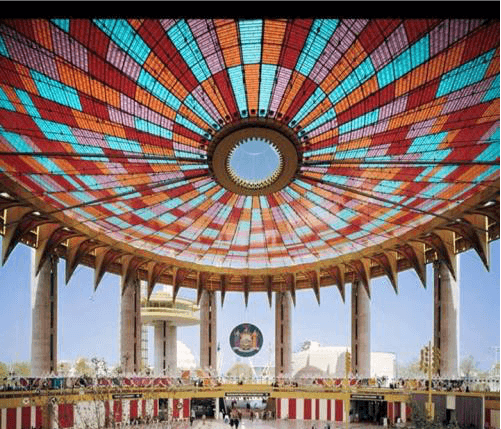
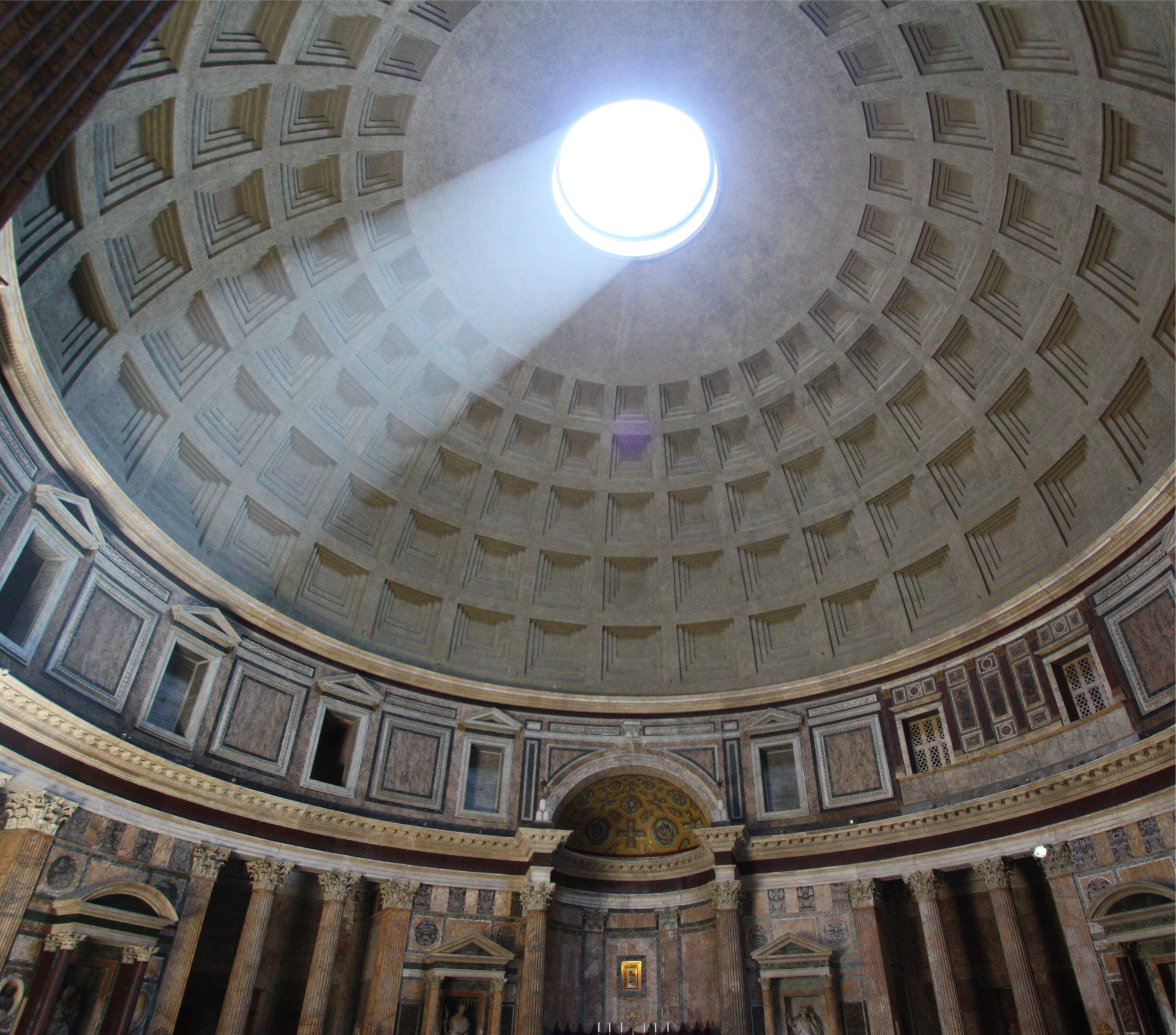
NYSP does not merely present a collection of symbolic references. The relationship between its futuristic structure and memory also suggests a particular conception of time. As Grosz E. (2001, p. 111) writes, ‘’a time bound up not only with the past and with history and historicity but also, perhaps primarily, with futurity, thus providing a mode of resistance to the privilege of the present and the stranglehold that the present and its correlatives, identity and intention, maintain on space and matter.’’7 The earlier description of the Pavilion as ‘settled in a different interval’ becomes more meaningful when read through these definitions and relationships.
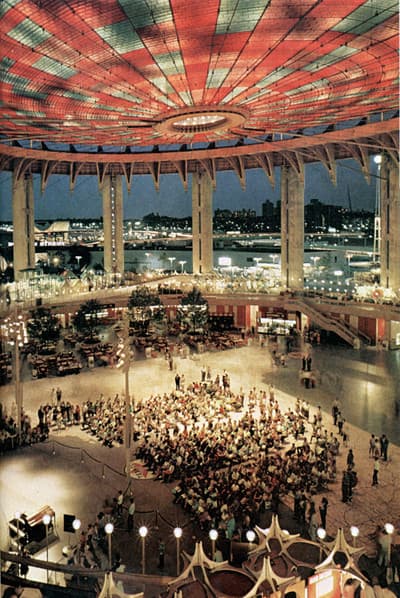
To develop this discussion of NYSP further, it is useful to ask: what does the ‘Tent of Tomorrow’ mean? As a form of shelter and security, a tent brings people together within an open and temporary spatial condition, a quality reinforced here by the temporality of the World’s Fair. The significance of this tent lies not simply in its temporary function, but in its orientation toward the future—toward ‘tomorrow.’ It was built for tomorrow, drawing on references from the past while attempting to serve the present. Through these temporal attributes, NYSP produced an experience of time-space compression and, within a short period, became one of New York’s most significant structures.
Fig.3
Despite this form of time-space compression, the initial response from society and users was largely positive. The situation changed rapidly after the World’s Fair. The dramatic transformations that affected the Pavilion accelerated its disconnection from society and from New York. As Harvey D. (1999, p. 426) writes, ‘’Rapid changes in the objective qualities of social space and time are both confusing and disturbing, precisely because their revolutionary implications for the social order are so hard to anticipate.’’8
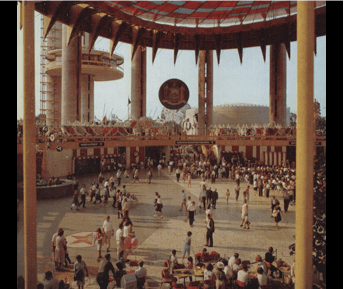
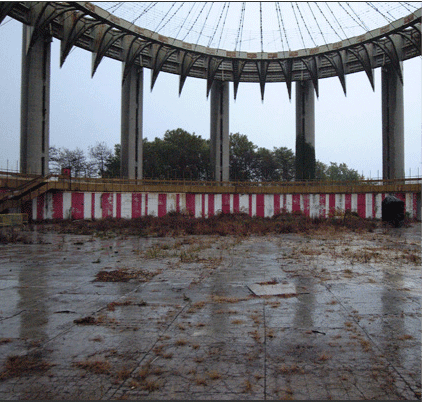
The space created by the ‘Tent of Tomorrow’ cannot be defined solely through its three-dimensional attributes, because the experiences of society as a whole make it possible to understand this space as a place, in the sense discussed earlier. After the World’s Fair, the Pavilion, which had occupied a different temporal interval, began to become alienated from both the city and society. A place, understood as an organized world of meaning, can sustain this definition only through social experience.9 When the connection between the Pavilion and the human experience offered by the present is broken, alienation begins. This alienation can be understood through the concept of ‘deterritorialization’ developed by Deleuze and Guattari.10
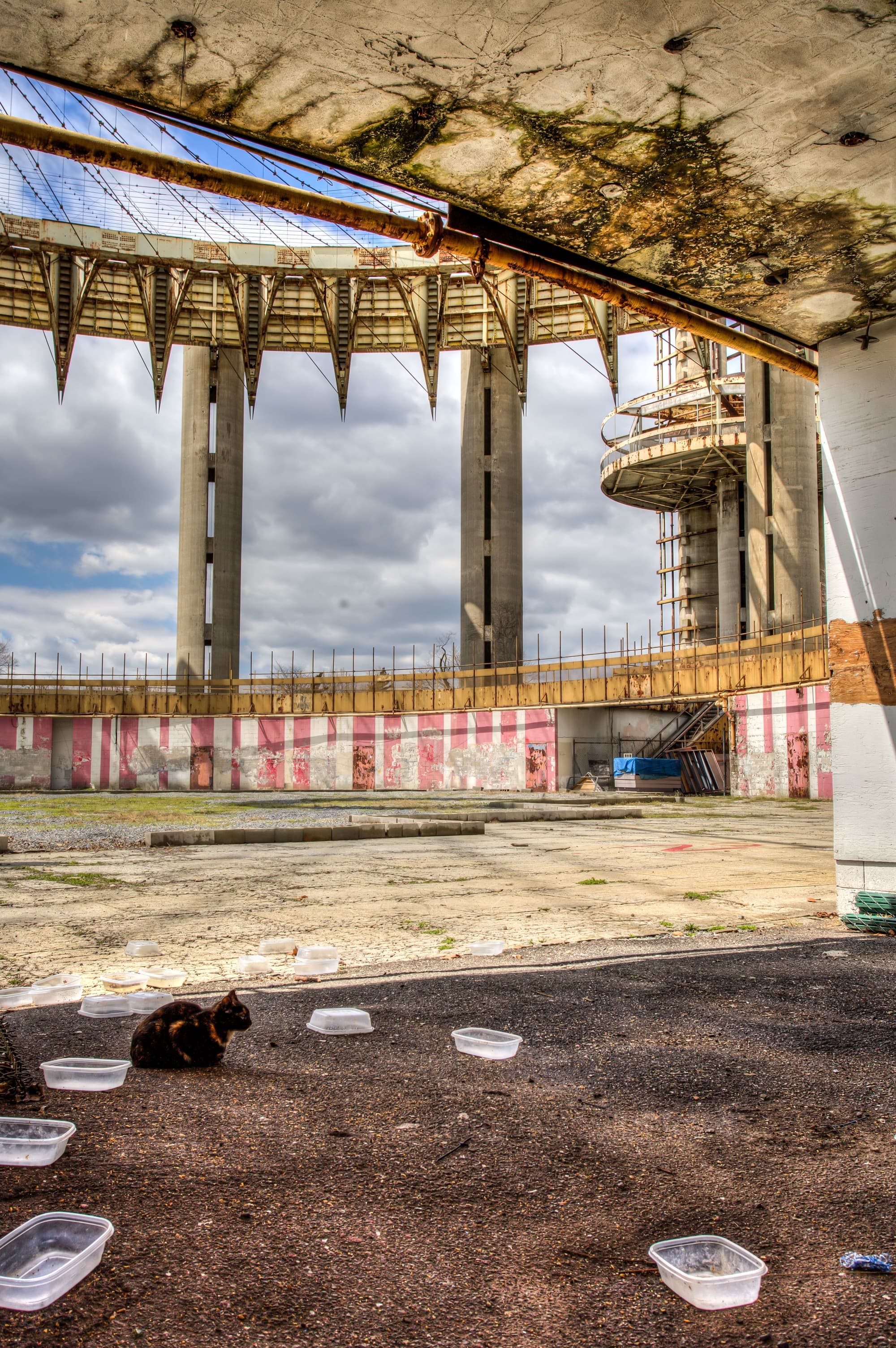
‘’ I am placed in my philosophy, and fancy myself some strange uncouth monster, who not being able to mingle and unite in society, has been expelled all human commerce, and left utterly abandoned and disconsolate.’’ (Hume, 1739, 264–5)11
Hume’s words can almost be read as if they were spoken by the Pavilion itself. One of the most important consequences of this form of deterritorialization can be observed in the Pavilion’s subsequent history. Neither national nor international architects were able to establish a lasting solution or new function capable of preventing NYSP from becoming increasingly detached from its time and context.
In this context, every process of deterritorialization is followed by a process of reterritorialization. There have been several attempts that illustrate this condition. The roller-skating project was one of them, but it too came to an end, and the cycle began again.
Fig 6
In recent years, a renovation initiative known as the NYSP Paint Project attempted to reawaken the Pavilion. However, it did not succeed in this aim. A meaningful relationship between society and the structure has still not been restored. The renovation did not produce such a relationship; instead, it primarily renewed visitors’ memories of the Pavilion.
1 Heidegger M., “Being and Time”,1962, pg. 21.
2 Tuan Y., ‘’Space and Place – The Perspective of Experience’’, 1977, pg. 179.
3 Deleuze G. & Guattari F., ‘’What is Philosophy?’’, 1994, pg.108
4 Hernandez N., “New York Tri-State”,2009, pg. 3.,Docomomo US
5 Draft National Register Nomination Narrative
6 Nora P., ‘’Between Memory and History’’, 1989, pg.9
7 Grosz E., ‘’Architecture from the Outside: Essay on Virtual and Real Space’’, 2001, pg.111
8 Harvey D., ‘’Between Space and Time: Reflections on the Geographical Imagination’’, 1999, pg.426
9 Tuan Y., ‘’Space and Place – The Perspective of Experience’’, 1977, pg. 179
10 Ballantyne A., ‘’Deleuze and Guattari for Architects’’, 2007, pg.13
11 Hume D., ‘’ A Treatise of Human Nature, Edinburgh’’, 1739, pg.264-5